



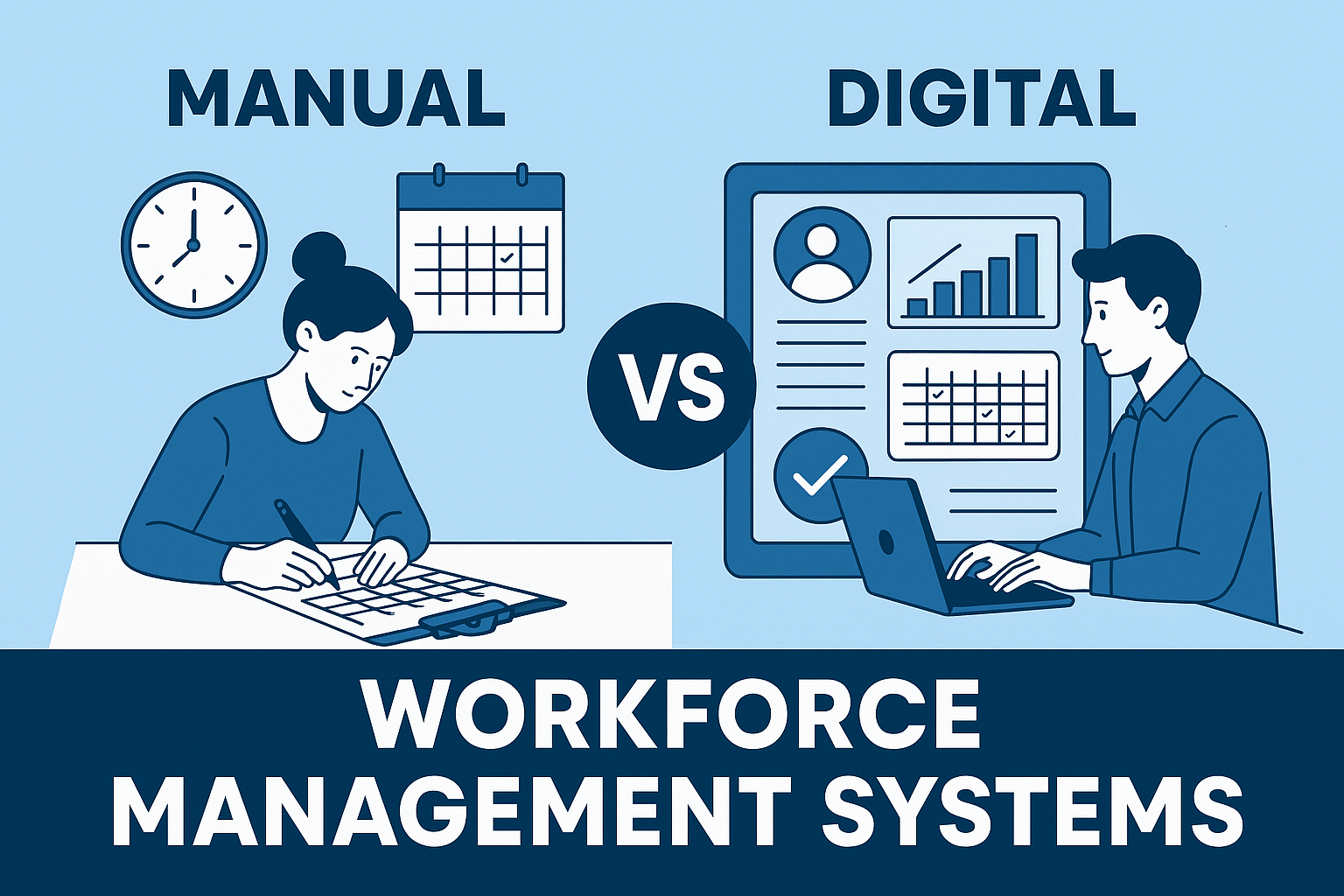
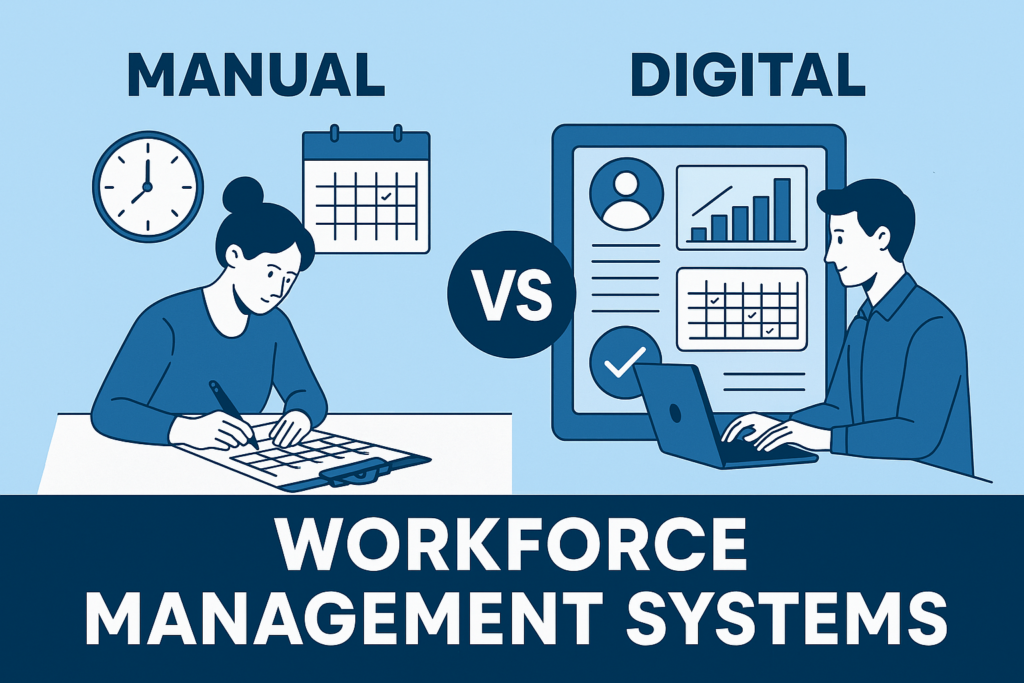
In today’s fast-paced business environment, workforce management plays a critical role in ensuring operational efficiency, compliance, and employee satisfaction. Organizations are increasingly transitioning from traditional manual systems to digital workforce management solutions. But what sets them apart? Let’s explore the key differences.
1. Efficiency and Accuracy
Manual workforce management relies heavily on spreadsheets, paperwork, and human intervention. This approach is not only time-consuming but also prone to errors such as miscalculations, misplaced records, or scheduling conflicts.
On the other hand, digital workforce management systems automate tasks like attendance tracking, shift scheduling, and payroll calculations. This significantly reduces errors and improves accuracy, saving both time and effort.
2. Real-Time Data Access
In a manual setup, accessing workforce data often requires going through files or reconciling multiple documents. This makes it difficult to get real-time insights or respond swiftly to business needs.
Digital systems provide real-time dashboards and analytics. Managers can instantly monitor attendance, productivity, and staffing levels, enabling quicker decision-making and better planning.
3. Scalability
Manual systems may work for small teams, but they quickly become inefficient as the workforce grows. Managing large volumes of data manually can lead to inconsistencies and delays.
Digital solutions are highly scalable. Whether an organization has 10 employees or 10,000, a digital platform can handle expanding data and operational complexity with ease.
4. Compliance and Record Keeping
Manual processes often struggle with maintaining compliance due to inconsistent record-keeping and lack of audit trails. This can expose organizations to legal and regulatory risks.
Digital workforce management systems automatically log records, track compliance requirements, and generate reports. This ensures transparency and helps organizations stay aligned with labor laws and internal policies.
5. Employee Experience
Manual systems often require employees to rely on HR for updates related to schedules, leave balances, or attendance records, which can cause delays and dissatisfaction.
In contrast, digital systems offer employee self-service portals and mobile apps. Employees can check schedules, apply for leave, and access payslips anytime, improving engagement and satisfaction.
6. Cost Implications
While manual systems may seem cost-effective initially, they often incur hidden costs due to inefficiencies, errors, and administrative overhead.
Digital systems require an upfront investment but deliver long-term cost savings through improved productivity, reduced errors, and better resource utilization.
Conclusion
The comparison clearly highlights that while manual workforce management systems may suffice for smaller operations, they fall short in meeting the demands of modern businesses. Digital workforce management systems like Tempus Central offer greater efficiency, accuracy, scalability, and employee engagement. As organizations aim to stay competitive and future-ready, adopting a digital approach to workforce management is no longer a luxury—it’s a necessity.