



In today’s digital-first workplace, organizations increasingly rely on multiple software systems to manage people, processes, and performance. Workforce Management (WFM) software—covering areas like attendance, scheduling, payroll, compliance, and performance tracking—plays a critical role in operational efficiency.
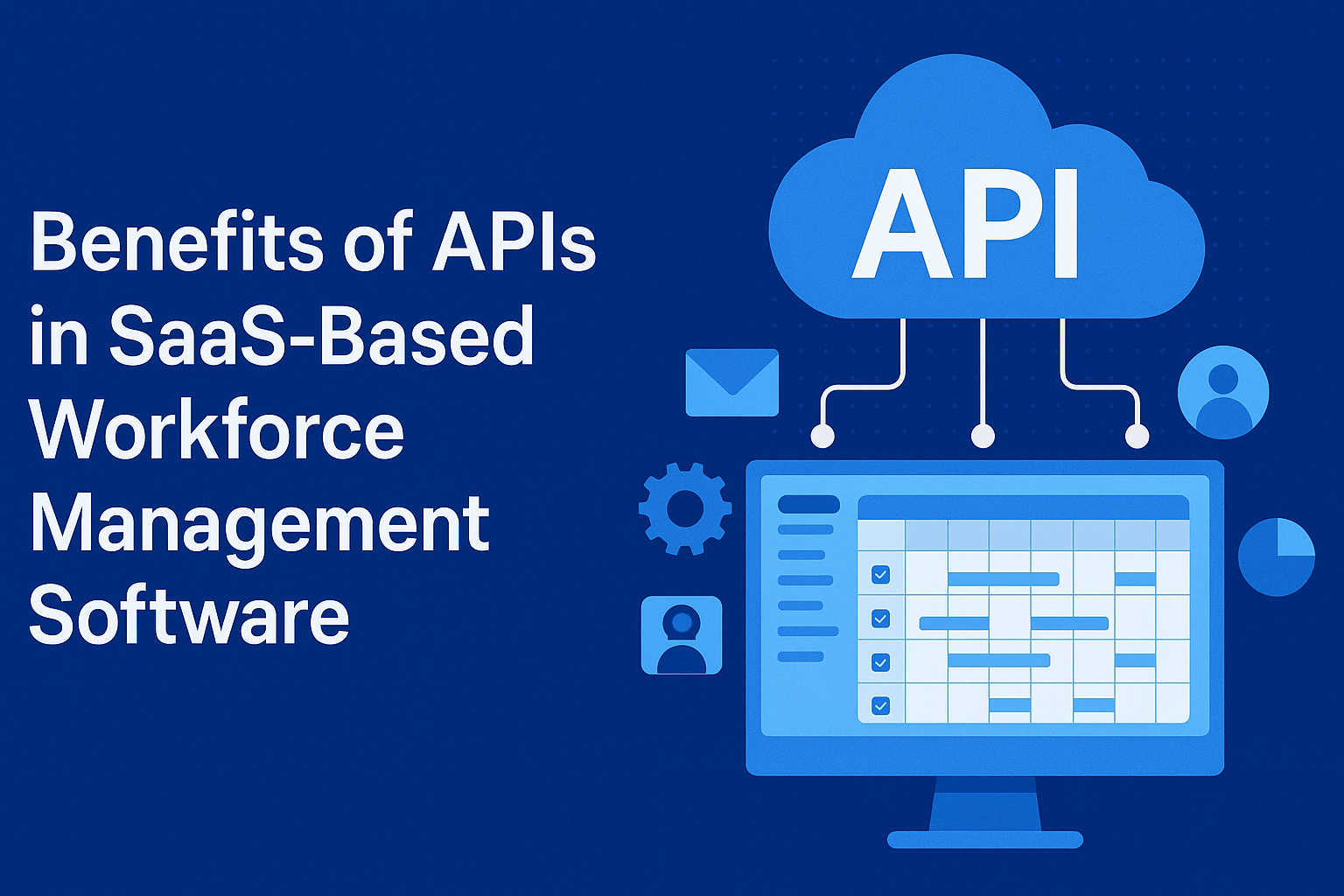
Application Programming Interfaces (APIs) have become the backbone of modern SaaS-based workforce management solutions, enabling seamless connectivity, scalability, and innovation. By allowing different systems to communicate securely and efficiently, APIs transform workforce management platforms from standalone tools into powerful, integrated ecosystems.
This blog explores the key benefits of APIs in SaaS-based Workforce Management software and why they are essential for future-ready organizations.
1. Seamless System Integration
One of the biggest advantages of APIs is their ability to integrate workforce management software with other enterprise applications such as:
- HRMS and HCM platforms
- Payroll and accounting systems
- ERP solutions
- Biometric and attendance devices
- Recruitment and onboarding tools
APIs eliminate data silos by enabling real-time data exchange between systems. For example, employee attendance data captured in a WFM system can automatically flow into payroll software, reducing manual effort and errors.
Impact:
Organizations gain a unified view of workforce data, streamline operations, and ensure data consistency across platforms.
2. Enhanced Automation and Productivity
APIs enable automation of repetitive and time-consuming workforce processes such as:
- Shift scheduling and updates
- Leave approvals and balance synchronization
- Payroll calculations
- Compliance reporting
- Employee status updates
By automating these workflows, organizations significantly reduce human intervention and administrative overhead. SaaS-based WFM platforms, when integrated via APIs, can trigger actions across systems without manual input.
Impact:
HR teams and managers can focus on strategic initiatives instead of routine administrative tasks, improving overall productivity.
3. Real-Time Data Access and Insights
APIs facilitate real-time access to workforce data across multiple applications. Managers can instantly track:
- Employee attendance and availability
- Overtime and shift deviations
- Labor costs and utilization
- Compliance gaps
This real-time visibility empowers decision-makers to act quickly—adjust staffing levels, manage overtime, or address attendance issues proactively.
Impact:
Faster, data-driven decisions lead to better workforce optimization and reduced operational risks.
4. Scalability and Flexibility for Growing Businesses
SaaS-based workforce management solutions supported by APIs are inherently scalable. As organizations grow or evolve, APIs allow them to:
- Add new modules or third-party tools without system overhauls
- Integrate new regions, locations, or employee categories
- Customize workflows based on business requirements
APIs provide the flexibility to adapt the software ecosystem as business needs change, ensuring long-term viability.
Impact:
Businesses avoid vendor lock-in and gain the agility to scale workforce operations seamlessly.
5. Improved Employee Experience
Modern workforce management is not just about administration—it’s also about employee engagement. APIs help deliver a better employee experience by enabling:
- Self-service portals for leave, attendance, and shift swaps
- Mobile app integrations for real-time updates
- Personalized notifications and alerts
- Faster query resolution through connected systems
When employees interact with a well-integrated system, it improves transparency, trust, and satisfaction.
Impact:
Higher employee engagement leads to better retention and overall workforce performance.
6. Stronger Compliance and Accuracy
Compliance with labor laws, tax regulations, and company policies is critical. APIs ensure that workforce data used for compliance reporting is accurate and consistent across platforms.
For example, attendance data synced through APIs ensures that payroll calculations and statutory reports align perfectly, reducing compliance risks and audit issues.
Impact:
Organizations minimize errors, avoid penalties, and maintain regulatory compliance with greater confidence.
7. Faster Innovation and Customization
APIs foster innovation by allowing organizations and software providers to build custom features, dashboards, and integrations on top of existing SaaS platforms.
This extensibility enables organizations to:
- Customize reporting structures
- Integrate AI or analytics tools
- Connect IoT or biometric devices
- Build organization-specific workflows
Impact:
Workforce management systems evolve continuously without disrupting core operations.
Conclusion
API availability is no longer an optional feature—they are a strategic necessity for a SaaS-based Workforce Management software like Tempus Central. By enabling seamless integration, automation, scalability, and real-time insights, APIs empower organizations to manage their business more efficiently and intelligently.
As businesses move toward increasingly connected digital ecosystems, workforce management platforms built on strong API frameworks will deliver greater value, agility, and competitive advantage.